
Listen to This Article:
Ever catch yourself sitting at your desk job, daydreaming of pulling a golden mille-feuille from the oven, or searing a pan of scallops for dinner until they’re perfectly caramelized? Maybe the pull toward culinary school feels strong, but one big question lingers: how do you fit it in when you still need to keep working?
At Auguste Escoffier School of Culinary Arts, you don’t have to choose between earning an income and following your culinary ambitions. Online programs can be convenient for busy adults, with coursework that can fit into your schedule and support systems that can help you balance work, family, and school.
The Flexibility of Escoffier’s Online Experience
Culinary education can take different forms. While some students thrive in the structure and immersion of an on-campus experience, others need more flexibility to balance school with work or family responsibilities. For some aspiring chefs and career-changers, Escoffier’s online programs could be the solution to help clear scheduling and other roadblocks. Built with working adults in mind, they offer the kind of adaptable format that can make culinary education possible even when life gets complicated.
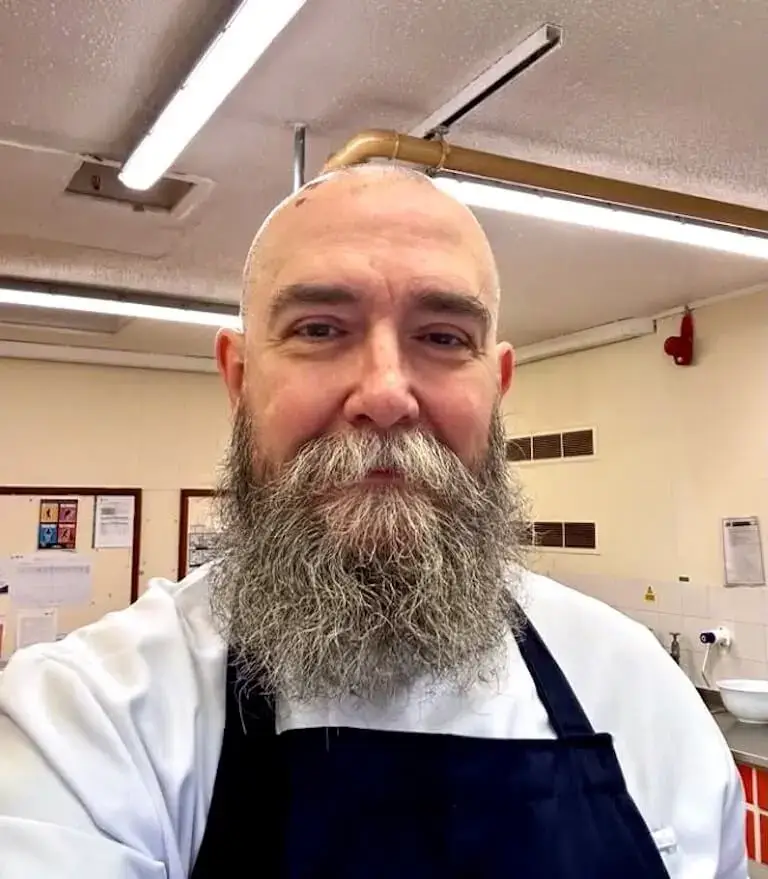
That flexibility was crucial for Marc Mole, who enrolled at age 45 after a transatlantic move and his wife’s cancer diagnosis shifted him into the role of primary caretaker. The online format let Marc balance family responsibilities while apprenticing at La Piquette, a French bistro in Washington, D.C., under Chef Francis Layrle’s mentorship. Marc rotated through every station in the kitchen, from meat to pastry, eventually stepping into the role of pastry chef—all while keeping up with his coursework. He could apply what he learned in class directly to his work in the kitchen that same week.
*Information may not reflect every student’s experience. Results and outcomes may be based on several factors, such as geographical region or previous experience.
Stories like Marc’s aren’t unusual at Escoffier. Students in the online program figure out their own way to make it work, fitting coursework between work shifts, family time, and everything else life throws at them. Here are a few strategies that come up again and again:
Study on Your Own Time
With asynchronous learning—meaning students and instructors don’t have to be online at the same time—you can log in and complete coursework when it works best for you, whether that’s early mornings before a shift, late nights after the kids are asleep, or a few focused hours on the weekend. Courses and video demos are available 24/7.
For food stylist Lisa Spychala, the ability to study whenever she needed was essential. While enrolled in Escoffier’s online Culinary Arts program, Lisa balanced both freelance styling jobs and restaurant shifts. This busy schedule pushed her to become more disciplined.
“It was a whirlwind,” she recalled. “I was working at a restaurant, freelancing, and then doing culinary school. The time management part took some getting used to. Ultimately, I think, it made me a better worker.”
By carving out specific study blocks and treating her coursework like another professional commitment, Lisa not only kept up but built new confidence in her abilities as a chef.
Kevin Fuller’s schedule was even more unpredictable. As a firefighter and EMT pulling 24- to 48-hour shifts, he’d often come home exhausted, wanting nothing more than to collapse into bed. But assignments were due, and he was determined to see it through.
“I wanted to take a nap so bad I couldn’t stand it,” Kevin said, “but I had to get in this class. I wanted to make sure that I did (culinary school) right.”
For Kevin, the online format was the only way culinary school could happen at all.
“If it wasn’t for the online classes, I probably wouldn’t have ever got my certificate,” he said. “With the schedules that we have, family, balancing work and school and everything else—it made it obtainable. It really made it obtainable.”

Online students can access video demos and lessons anytime, from anywhere.
Weekly Rhythm Built for Working Adults
Assignments are released every Wednesday, and students have until the following Tuesday at 11:59 p.m. CT to submit their work. This predictable structure means you can plan your week around your other responsibilities without fear of missing a lesson. You know when new material arrives and when it’s due, so there are no surprises derailing your schedule.
Hands-On Assignments at Home
After watching Chef Instructor cooking demos, attending live sessions and/or watching the session recordings, students complete assignments in their own kitchens. Photos of the process are submitted for feedback, so instructors can provide technical guidance, correction, encouragement, and mentorship.

*Information may not reflect every student’s experience. Results and outcomes may be based on several factors, such as geographical region or previous experience.
As an online Escoffier student, you’ll also complete a hands-on industry externship in a professional kitchen, bakery, or food business. You get to decide where to complete your externship, so it can be close to home if that works for you and your schedule. Along the way, you can sharpen your skills in a live environment, build confidence, and make industry connections, all while testing what you’ve learned before graduation.
Connect with Classmates Nationwide
While studying online, you can also find plenty of ways to connect with peers across the country and around the world. Discussion forums, like Escoffier’s Club Hub, let you join groups based on your interests (such as sourdough, edible gardening, or plating and presentation). These outlets can make it possible to swap stories, trade tips, and support one another while building lasting professional networks in an online environment.
Personalized Support
Escoffier’s Success Coaches are dedicated to helping students navigate challenges outside the classroom, offering guidance on time management or overcoming personal obstacles that might arise along the way.
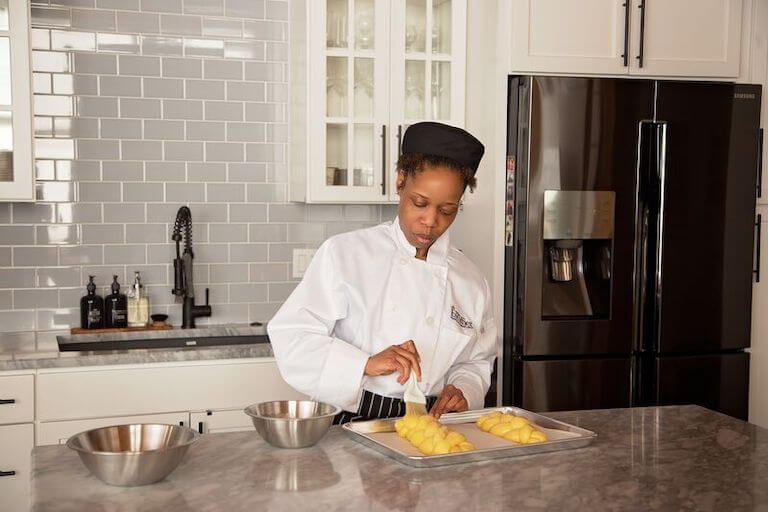
With online learning, aspiring chefs can practice from home while balancing work, family, and education.
Which Programs Are Offered Online?
With options for diploma or degree tracks, you get to pursue what matters to you, with flexibility in your timeline, in your own kitchen, and with a support system that can meet you where you are. Here’s what you can explore:
Culinary Arts (Associate Degree or Diploma)
Sharpen your skills in modern and classic cooking techniques, gain knowledge in food safety and nutrition, and discover what it takes to manage a kitchen like a professional. You can develop the foundation that every chef needs, whether you dream of running a restaurant or opening your own home-based business.
Baking & Pastry Arts (Associate Degree or Diploma)
Picture yourself in the life of a professional baker: crafting artisan breads, elegant pastries, and stunning cakes. In this program, you can be hands-on with everything from foundational doughs to cake decorating, all from your own kitchen, at your own pace within the assigned timeline.
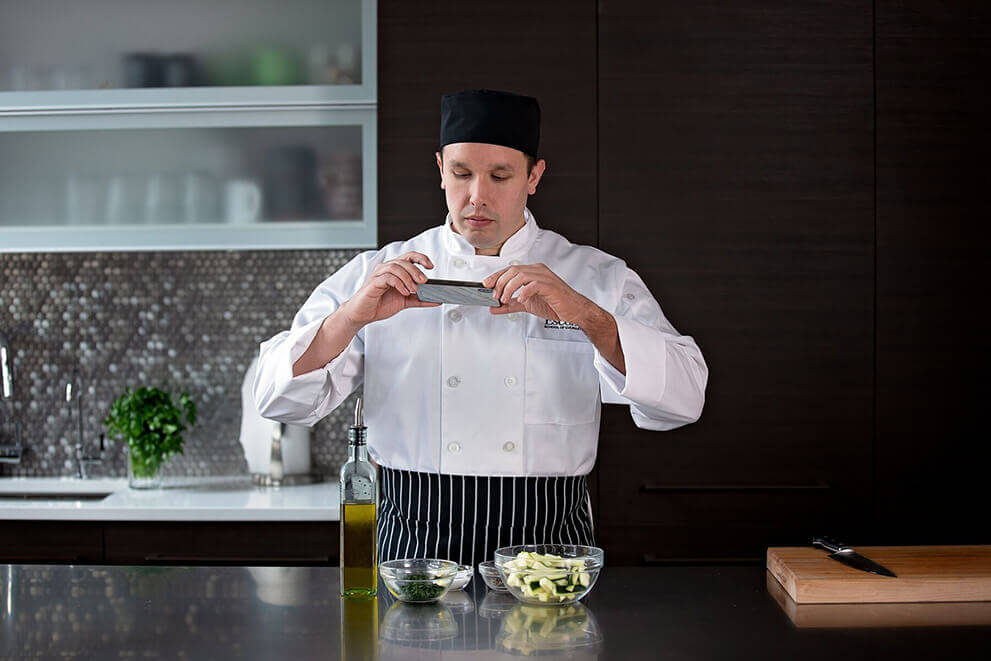
Students photograph each stage of their assignments for instructor review.
Plant-Based Culinary Arts (Associate Degree or Diploma)
If you’re passionate about sustainable, plant-powered cuisine, this program can let you dive deep into ethical cooking techniques focused entirely on plant-based foods. You can explore how to create delicious, vibrant dishes that celebrate flavor, creativity, and mindful sourcing.
Food Entrepreneurship (Associate Degree or Diploma)
Do you have a business idea waiting to take off? Here, you can explore what it takes to launch your own food business, from food truck to bakery to pop-up restaurant. You can pick up practical skills in marketing, menu design, cost control, and more.
Holistic Nutrition & Wellness (Associate Degree or Diploma)
Blend the science of nutrition with the art of healthy cooking. You’ll be hands-on in your kitchen, discovering how to create meals that nourish the body and support wellness-focused careers, whether you want to coach others or become a personal chef for health-minded clients.
Hospitality & Restaurant Operations Management (Associate Degree)
Step into the world of management for restaurants, hotels, and event venues. You can build leadership skills, learn how to deliver unforgettable guest experiences, and discover what it takes to run a thriving hospitality business from behind the scenes.
Life Experience as Your Edge
Worried that you’re “too old” for culinary school? Kevin Fuller, a firefighter and EMT who enrolled after nearly three decades in emergency services, found that his background helped him succeed.
“Having that life experience, I think helped me along the way,” he said. “I’m not saying anybody couldn’t do it right out of high school—absolutely, if they have the drive and the will and want to do it, anybody can do anything they want to do. But to me, it actually helped me by having life experience.”*
Years of managing high-stress situations, working under pressure, and staying disciplined gave Kevin an advantage in the kitchen. If you’ve spent time in another career, don’t discount what you’ve already learned. The skills you’ve built, such as time management, problem-solving, staying calm when things go sideways, can transfer directly into culinary work.
*Information may not reflect every student’s experience. Results and outcomes may be based on several factors, such as geographical region or previous experience.
Tips for Balancing Work and Online Culinary School
If you’re ready to take the leap into online culinary school, balancing work and classes comes down to strategy. With a little planning and smart time management, you can keep both moving forward. Here are a few helpful ways to stay on track:
- Block Out Study Time: Pick set times each week for schoolwork, just like you would for a job or doctor’s appointment. Maybe it’s early in the morning before work, or after dinner when things are quiet. Sticking to a routine can help you make steady progress.
- Make the Most of Your Days Off of Work: Use your days off to tackle bigger tasks, such as batch-cooking recipes. You can focus, experiment in the kitchen, and even get ahead for the busy week.
- Learn on the Go: Turn commutes, work breaks, or quiet moments into study time. The online lessons and videos are easy to access from your phone, tablet, or laptop so you can squeeze in studying just about anywhere.
- Keep Family and Work in the Loop: Let your boss, coworkers, and family know when you’ll be studying. Sharing your schedule helps them understand your priorities, and you might be surprised by how much support you receive.
- Ask for Help When You Need It: Don’t be shy. Your instructors, Success Coaches, tutors, and fellow students want to see you succeed. If you hit a rough patch, connect with someone. Many students even create study groups or cooking buddies for extra motivation.
- Set Up Your Space for Success: Make sure your internet is reliable, your computer is ready for video lessons, and your kitchen is organized. A good setup cuts down on frustration and helps you stay focused during study time.
- Blend Work and School: Already working in a professional kitchen? Let your education complement your experience. When your employer knows you’re enrolled in culinary school, you may get the chance to showcase new skills, collaborate on recipe ideas, or bring fresh perspectives to the team. This hands-on practice can make lessons stick.
Blending work and school is exactly what Geno Vento did. As the owner of Philadelphia’s iconic Geno’s Steaks, Geno found that enrolling in culinary school meant balancing formal training with the demands of running a multi-million-dollar business—while also living up to the legacy of his late father, who founded the restaurant in 1966.
When his father passed, Geno knew he had big shoes to fill. He felt the weight of carrying the family name forward. Geno had learned the ropes the traditional way—by doing—while growing up in the family restaurant. Naturally, he was skeptical about learning culinary techniques online. But when he enrolled in Escoffier’s program, detailed Chef Instructor feedback quickly won Geno over, and he soon began applying new skills directly at the restaurant. One standout example: reinventing the restaurant’s decades-old roast pork sandwich using methods he picked up in class. His story shows how Escoffier students can sharpen their skills and spark innovation in their own workplaces while still in school.
Finding the Right Fit For Your Life
Balancing work and culinary school is achievable, and it’s a path many Escoffier students have successfully navigated. Flexible program options, guidance from experienced chef instructors, and a supportive community designed for working adults can make it possible to continue your career while pursuing culinary education.
With thoughtful planning and the right program format, you can develop new skills while maintaining the life you’ve already built. To find out more about how online or on-campus programs can fit your goals, contact us for more information.
Liked this article? Try these next:

